
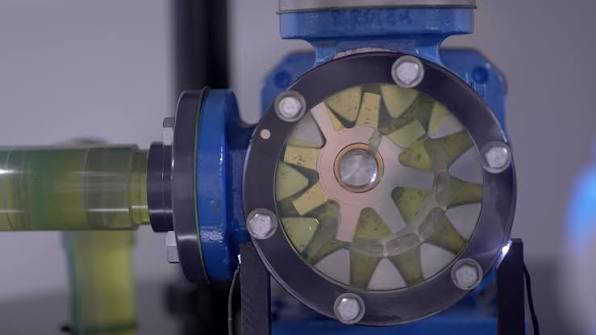
In the world of industrial processing, moving fluids with precision and consistency often determines the quality of the final output. Whether it is a dense, temperature-sensitive ingredient or a hydraulic fluid tasked with powering heavy machinery, the underlying mechanics of how these substances are moved—and how that movement is managed—are central to efficient production. For those navigating the complexities of industrial equipment, understanding the distinct roles and operational trade-offs of chocolate pumps and flow dividers provides a foundation for better maintenance and smarter selection processes.
The Challenge of Precision in Industrial Fluid Handling
Every industrial system faces a fundamental hurdle: how to move a substance from one point to another without compromising its state or its volume. This challenge is magnified when the fluid being handled has unique physical properties, such as a high viscosity or a sensitivity to shear.
In many production environments, the goal is not merely to move fluid but to move it at a controlled rate, often distributed across multiple lines simultaneously. When equipment is undersized, poorly matched to the material’s characteristics, or improperly maintained, the system suffers. This leads to common frustrations: uneven product distribution, premature mechanical wear, and energy inefficiencies that ripple through the entire operation. Recognizing the operational requirements of a system—before a breakdown occurs—is the most effective way to avoid costly downtime.
How Specialized Pumping Mechanisms Generally Function
When discussing equipment like chocolate pumps, the conversation centers on the mechanics of displacement. These pumps are typically designed to handle substances that are thick, prone to hardening at lower temperatures, or easily damaged by excessive physical agitation.
The mechanism usually involves a rotor or a similar rotating component that traps the fluid and moves it toward the outlet. This approach is favored because it provides a steady, non-pulsing flow, which is essential for maintaining the texture and consistency of sensitive materials. The design often emphasizes internal clearances that allow for the handling of particles or thick consistencies without causing friction-induced heat buildup.
A primary consideration for those overseeing this equipment is thermal management. Because the substance’s viscosity changes significantly with temperature, the pump often includes features to maintain specific heat levels. Without this, the material can solidify within the pump chambers, creating resistance that stresses the motor and the internal components. Operators should ask about the pump’s sealing mechanisms and the materials used for its construction to ensure they are compatible with the specific requirements of their processing environment.
The Role of Flow Dividers in Distributed Systems
While a pump provides the movement, a flow divider serves a different, equally critical function: ensuring that a single input stream is accurately split into multiple output streams. This is common in hydraulic systems where one power source must drive multiple actuators or components at the same time.
The way a flow divider functions depends on its internal architecture, which is generally designed to compensate for differing levels of resistance across output lines. If one line experiences higher pressure than another, a poorly balanced system would naturally send all the fluid toward the path of least resistance. A divider manages this by adjusting its internal chambers to ensure that the proportions remain consistent, regardless of the load on the individual output paths.
This capability is vital for synchronizing equipment. Without reliable division, components could operate out of sequence or at uneven speeds, which often leads to structural stress or imprecise results in the final production. Choosing the right type of divider—whether it operates through gear-based mechanisms or more complex spool-based designs—requires a careful assessment of the system’s pressure requirements and the desired accuracy of the division ratio.
Key Factors That Shape Performance and Longevity
The reliability of both pumping and distribution equipment hinges on several universal factors. First and foremost is the cleanliness of the fluid. Contaminants, even at microscopic levels, can scratch the close-tolerance surfaces inside pumps and dividers, leading to internal leakage that is often invisible to the naked eye. Over time, this leakage reduces efficiency and creates a feedback loop of heating and wear.
Second, the operational envelope—the specific range of pressures and speeds for which the component was intended—must be respected. Pushing a component toward its upper limits of pressure for extended periods will accelerate the fatigue of seals and mechanical surfaces. It is often wiser to select equipment that operates comfortably within the middle of its rated performance range rather than relying on a component that must consistently run near its maximum capacity.
Finally, the environment in which these components are placed plays a role. Equipment operating in high-humidity areas or locations subject to wide temperature fluctuations will require more frequent seal checks. The seals and gaskets are the most common points of failure; monitoring them for signs of leakage is a proactive task that typically prevents the catastrophic failure of the main mechanical housing.
Practical Approaches to Maintenance and Management
To ensure that systems involving chocolate pumps and flow dividers remain reliable, a structured approach to maintenance is more effective than waiting for performance to degrade. Start by establishing a routine inspection schedule that focuses on the subtle indicators of trouble: noise changes, temperature spikes, or vibrations that were not present previously.
When evaluating equipment for a new project or a replacement, prioritize modularity and accessibility. If a seal needs to be replaced, how difficult is it to reach? Does the component allow for field repairs, or does it require a specialized service center? These practical questions often matter more than the initial purchase price, as they directly dictate the total cost of ownership over the equipment’s lifespan.
Furthermore, maintain thorough documentation regarding the system’s operating parameters. Knowing the average pressures, flow rates, and operating temperatures allows for a baseline comparison when performance issues arise. If a component begins to deviate from these baselines, it provides an early warning that is often the difference between a minor adjustment and a full system shutdown.
When issues do occur, consult with the technical specifications provided by the manufacturer to identify the intended maintenance procedures. If the system’s performance does not align with these specs, it is often helpful to involve those who specialize in fluid power and industrial processing, as they can provide insight into how environmental variables might be impacting the equipment. Taking a disciplined, data-informed approach to managing your fluid systems helps ensure that they serve their purpose efficiently for as long as possible.